
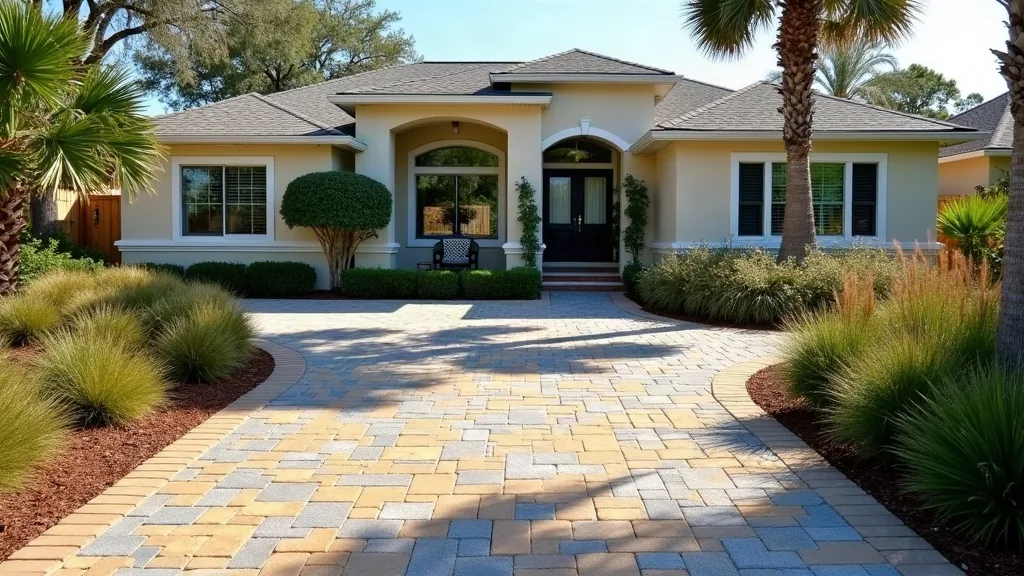
Brighter pavers with clean, full, freshly sanded joints
Paver Cleaning and Joint Sand in Neptune Beach
Get a free paver cleaning quote with no obligation by calling (904) 906-9979.
- Brings out deeper paver color
- Fresh joint sand helps lock pavers in place
- Gives weeds less room to grow
- Makes the surface easier to keep clean
- Free estimate, no obligation
Request a Free Estimate
Free, no obligations.
How does paver cleaning help your home?
Paver cleaning lifts salt film, algae and dirt off the surface so your pavers look brighter and feel safer underfoot. New joint sand then helps lock them in place and gives weeds less room to grow. The path you walk back from the beach starts to look like part of the house again. The estimate is free and carries no obligation, so call (904) 906-9979.
Cleaning is the first stage of any sealing job, and it can also stand on its own. The spots that show it first around here are the ones that catch blown sand and stay damp. One home can have a bright, open driveway and a dull side walkway at the same time. Point out the worst areas when you request a quote.
Neptune Beach Paver Sealing Is Proud to Serve the Neptune Beach Area
What is included in paver cleaning?
Pavers are due for a wash when you see dark streaks, a gray cast, green growth, weeds in the seams or joints that look lower than the pavers. Green growth is the one to deal with first on walkways and pool decks, since a slick surface can hurt someone. To speak with a contractor about this, call (904) 906-9979.
Salt and sand are the local part of the job. Nicolock, a paver maker, says salt travels through the air as tiny particles and that occasional rinsing removes salt residue and sand from coastal hardscapes. A garden hose handles the light work between washes. Tell them how close to the ocean you are when you request a quote.
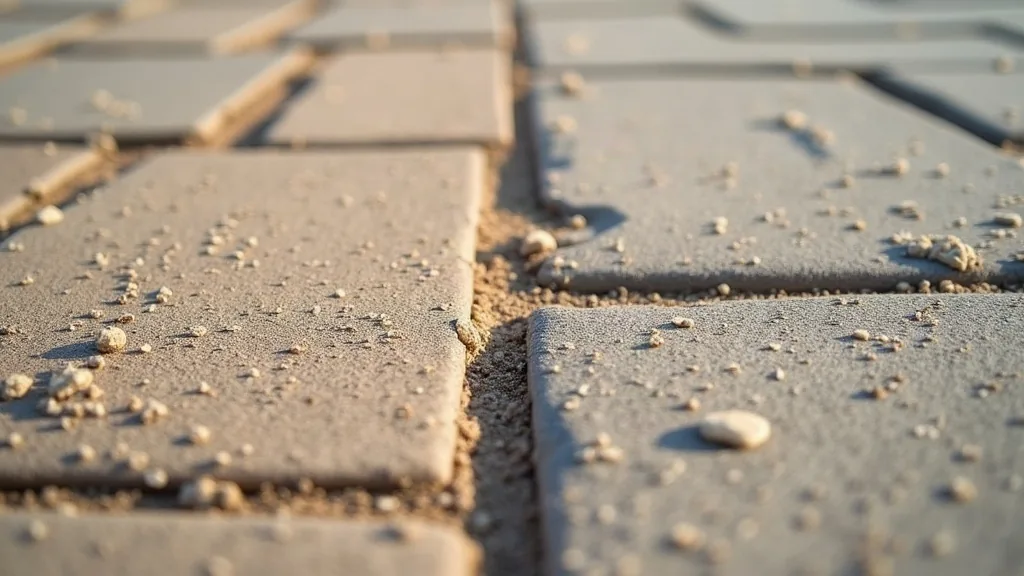
Joints in a beach town can fool you. Blown sand settles on top and makes a joint look full while the proper joint sand beneath it has dropped. That loose sand has to come out before new sand goes in. Local companies name ASTM C144 sand in their jointing work. Ask which sand the contractor uses, or call (904) 906-9979 to talk it through.
A cleaned surface is not a protected one, so salt and staining can come back on their own schedule. Sealing afterward adds a coat that makes later rinsing easier and can deepen color, though it becomes a repeat job every few years. Tell the contractor which way you are leaning when you call (904) 906-9979.
Fresh pavers need to dry before any coat follows a wash. Unilock, a paver maker, says to wait at least 24 hours, and shade slows it down. Gator, a sealer maker, says to allow 48 hours of dry weather after rain. Ask how the contractor handles rain delays when you request a quote.
Here is a common myth: a stronger blast gives you a cleaner surface. It does not. Family Handyman says to start with a white 40 degree nozzle and move to a green 25 degree nozzle only if dirt stays behind, spraying each paver for a second or two. It also warns against spraying into the joints, since that dislodges the sand. Unilock says to pick a setting gentle enough to avoid scarring and to use a fan spray. Ask about nozzle and technique before you request a quote.
Chemistry matters as much as pressure. Unilock starts with dish soap in warm water, says biodegradable cleaners are less aggressive and warns that muriatic acid can etch concrete pavers and change their color. Hunker's bleach mix is half a cup in a quart of warm water, and it warns that a stronger mix can lighten pavers or leave them splotchy. Never mix bleach with vinegar or ammonia. Ask what goes on your pavers, then call (904) 906-9979.
A white, chalky film is a separate problem from dirt. Nicolock describes efflorescence as a white residue that can appear when moisture moves through cement based products, and salt residue from ocean air can look similar. Unilock says efflorescence typically clears in two to three months or up to a year, and sealing must wait until it is gone. Point out any white areas when you request a quote.
How often should pavers be washed? Family Handyman says once a year, ideally each spring. Near the ocean, Nicolock says frequency depends on how close you are to the shoreline and on storm activity. To set a schedule that fits your place, call (904) 906-9979.
Pre-treatment
A cleaner suited to the stain loosens algae, salt film and organic marks before washing.
Washing
The surface is washed in sections with a wide fan pattern so the joints stay in place.
Joint sand
Loose beach sand comes out and proper joint sand goes in after the pavers dry.
Optional sealing
A coat can follow once the surface is fully dry. See the sealing guide.
Paver surfaces that get cleaned
Driveways
A driveway carries the car, the oil drips and most of the afternoon sun. Cleaning here aims for even color and full joints, so the pavers stay locked under the weight of a parked car.
Pool decks and lanais
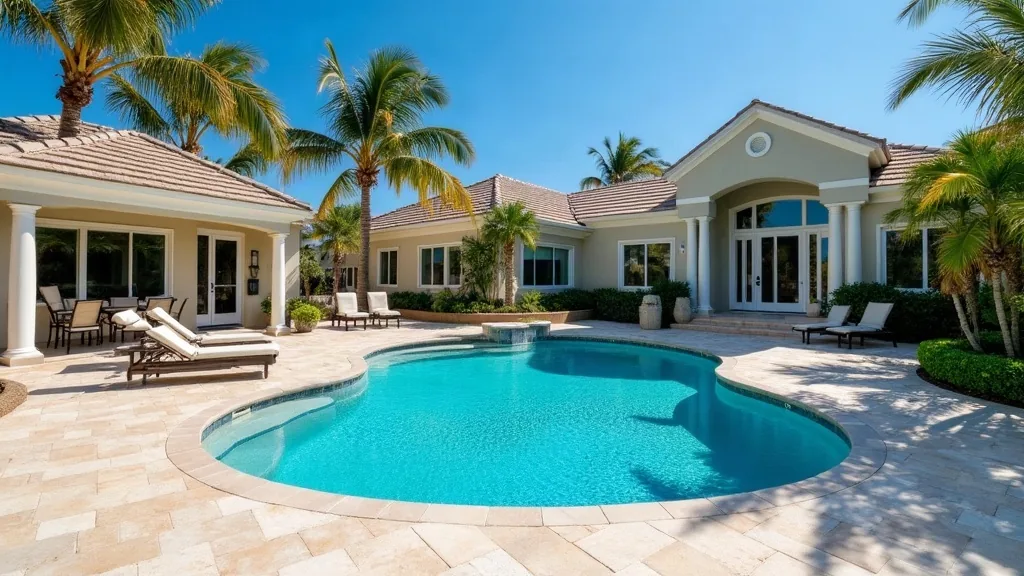
Pool decks take splash water, bare feet and, at a salt water pool, salt as well. Cleaning around a pool should leave a surface that drains well and keeps its grip when wet.
Patios and courtyards
Patios tend to collect blown sand in the corners and stay damp longer where walls block the breeze. Cleaning on a patio starts with clearing those corners out.
Walkways and beach paths
Walkways catch the sand on everyone's feet coming home from the ocean. Cleaning near an entry gives you a clean first step to the front door.
5 paver problems Neptune Beach homeowners see
1. Salt film and flat color
Nicolock, a paver maker, says salt rides the air as tiny particles and can crystallize as moisture dries. Near the ocean that leaves a dull cast. Local companies also name sun fading as a reason to seal, and a good wash brings back the color still there.
2. Beach sand in the joints
Wind and feet carry fine beach sand onto the pavers. It makes joints look full when the real joint sand has dropped. Loose sand comes out before new sand goes in.
3. Storm water pulling joint sand
Hard rain moves joint sand, and low spots hold water afterward. Nicolock warns that standing moisture can affect stability when the base and joints are poor.
4. White film after damp spells
Nicolock describes efflorescence as a white residue that shows up when moisture moves through cement based products. Unilock says to hold off on sealing until it has fully cleared.
5. Old coats nobody remembers
NeighborhoodScout puts more than nine in ten Neptune Beach homes before 2000, so plenty of pavers have an unknown coat on them. Unilock advises testing old and new sealers before resealing.
Paver cleaning pricing in Neptune Beach
Some companies price cleaning on its own, and one Jacksonville company publishes rates from $0.22 per square foot. Do that math and a 600 square foot driveway starts near $132, while a 1,000 square foot pool deck starts near $220. Check what the number covers, because joint sand and repairs are often priced apart from the wash. For a price on your property, request a quote. The estimate is free, with no obligation.
Planning to seal as well? Northeast Florida companies commonly publish $1.50 to $2.50 per square foot for the full clean, sand and seal, so the wash is usually folded in. To compare the two, call (904) 906-9979.
Want to protect the surface too? Our paver sealing guide covers the next stage, and the areas we serve list shows who is covered around paver sealing in Neptune Beach. Ready now? Call (904) 906-9979.
| Size of the area | Wash only, starting at | Wash, sand and seal |
|---|---|---|
| 300 sq ft | $66 | $450 to $750 |
| 600 sq ft | $132 | $900 to $1,500 |
| 1,000 sq ft | $220 | $1,500 to $2,500 |
Wash only figures use the $0.22 per square foot starting rate published by one Jacksonville company. The last column uses the $1.50 to $2.50 range Northeast Florida companies published as of November 2026.
Why choose us for paver cleaning?
One request, one company
Your details go to a single independent company that works in your area. That keeps your phone from filling up with rival businesses after the same job.
Free for homeowners
This website costs you nothing to use. Any price is between you and the contractor, and you are free to turn it down.
Prices you can check first
This site shows the per square foot rates Northeast Florida companies publish, so you can weigh the first number a contractor gives you.
Your call from start to finish
You choose whether to hire anyone. Read what to ask a contractor, get the price in writing and take your time.
Contact Us Today for a Free Estimate
Tell us about your pavers and one local contractor will follow up.
Free, no obligations
How the paver cleaning process works
1. Look it over
The contractor walks the area and checks for low spots, stains, old coats and where water sits before pricing the cleaning work.
2. Wash and rinse
Salt film, sand, algae and dirt come off in sections, with a nozzle chosen to leave the joints alone.
3. Refill the joints
After the surface dries, new joint sand gets swept in and settled so the pavers lock together again.
4. Wait for dry weather
Sealer needs a dry surface, so timing follows the forecast. It goes on by sprayer, foam roller or both, in the finish you picked.
5. Review it together
The contractor shows you the work, tells you when you can walk or park on it and gives you an idea of when it will need attention again.
Frequently Asked Questions
How much does paver cleaning cost in Neptune Beach?
One Jacksonville company publishes cleaning from $0.22 per square foot, which puts a 600 square foot driveway at about $132 to start. Check what is included, since joint sand and repairs are often priced apart.
Can I pressure wash my paver patio?
Yes, with a gentle setting. Family Handyman says to start with a white 40 degree nozzle and spray each paver for a second or two. Keep the spray out of the joints, or you will knock the sand loose.
Is it a good idea to pressure wash pavers?
It can be, if the wand keeps moving. Unilock says to use a fan spray at a steady distance and to pick a setting gentle enough to avoid scarring. Plan to refill any joint sand that comes out.
What do professionals use to seal pavers?
The wash comes first, usually with a pressure washer on a wide fan tip and a cleaner chosen for the stain. Unilock warns that muriatic acid can etch concrete pavers. See the sealing guide for the coat itself.
How much does it cost to seal outdoor pavers?
Companies serving Northeast Florida publish $1.50 to $2.50 per square foot for the full clean, sand and seal. A 1,000 square foot pool deck would land near $1,500 to $2,500. Failed old coats and repairs add to it.
Can I clean my pavers with Dawn dish soap?
Yes, for everyday dirt. Family Handyman's method mixes Dawn into a bucket of water for a foamy lather. Scrub with a stiff plastic brush, because Unilock says a wire brush can leave metal fragments behind.
How do I get blown beach sand out of paver joints in Neptune Beach?
Sweep and rinse the loose sand off first, with the water angled away from the joints. Nicolock, a paver maker, says occasional rinsing clears salt residue and sand in coastal settings. If the joints sit low after that, they likely need new sand.
How often should pavers be cleaned in Neptune Beach?
Family Handyman says once a year, ideally each spring. Near the ocean, a light rinse in between helps, since Nicolock says the need depends on how close you are to the shoreline and on storm activity.